
Contents
Driving from Qatar to Bahrain gives travellers the chance to cross the iconic King Fahd Causeway — a 25-kilometer bridge linking Saudi Arabia and Bahrain. Built in 1986, it’s considered an engineering marvel, offering panoramic seaside views along the way. The trip is a favourite long-weekend getaway for both locals and expats — but it's also a journey that requires some planning. And if you’re still figuring out how to travel to Bahrain by road from Qatar, the key is preparation — knowing the correct route, visa rules, and insurance coverage.
Route and travel time
The drive from Doha to Manama, Bahrain, covers around 450 to 500 kilometres of desert and long coastal highways. Leave Qatar via Abu Samra and then drive through the highways of Saudi Arabia's Eastern Province, before entering Bahrain via the King Fahd Causeway.
Most travellers complete the journey in about 5 to 6 hours, depending on border traffic. The roads are excellent, but petrol stations can become scattered in the heart of Saudi territory, so it's a good idea to fill up in Dammam or Al Khobar before leaving.
To help with your travel plans, view live traffic info and border wait times on the King Fahd Cinauseway Authority website before you leave.
Who needs a visa to Bahrain?
For Qatari nationals, visiting Bahrain is simple — no visa is required. You can enter with your passport or national ID and stay under standard GCC rules, which allow citizens of Gulf countries to travel freely between member states. Expatriate residents, however, must apply for a Bahrain visit visa or eVisa in advance.
Bahrain visa requirements
For expatriate residents in Qatar, Bahrain offers a convenient visit visa that can be obtained through the official Bahrain eVisa portal. To qualify, you must:
-
Be applying from outside Bahrain
-
Have held a GCC residence permit for at least 3 months, valid for another 3 months beyond your travel date
-
Work in a non-labor occupation — meaning being employed in an administrative, professional, or skilled role, rather than performing manual or unskilled work
-
Hold a passport valid for at least 6 months
-
Provide proof of return ticket and hotel booking, or a Bahraini host’s ID if staying with family/friends
The visa is valid for 2 weeks and allows a single entry. Extensions can be arranged through Nationality, Passports and Residence Affairs (NPRA) offices or online.
The total cost is 5.000 Bahrain Dinar (BD), which is approximately QAR 50. The fees are paid electronically, with approval typically received within 3–5 working days. Your visa remains valid for three months from the date of issue. If unused within that time, you’ll need to apply again.
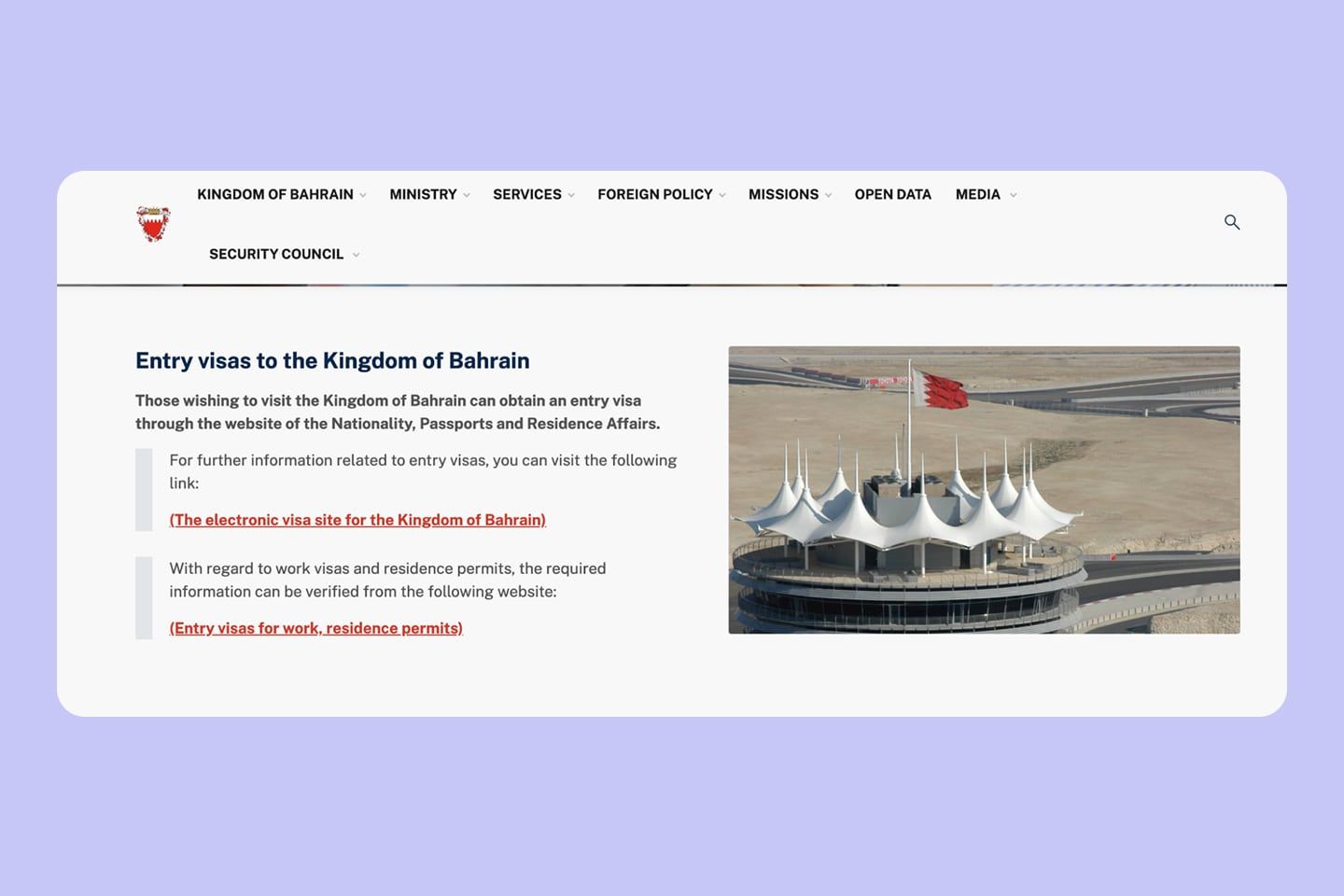

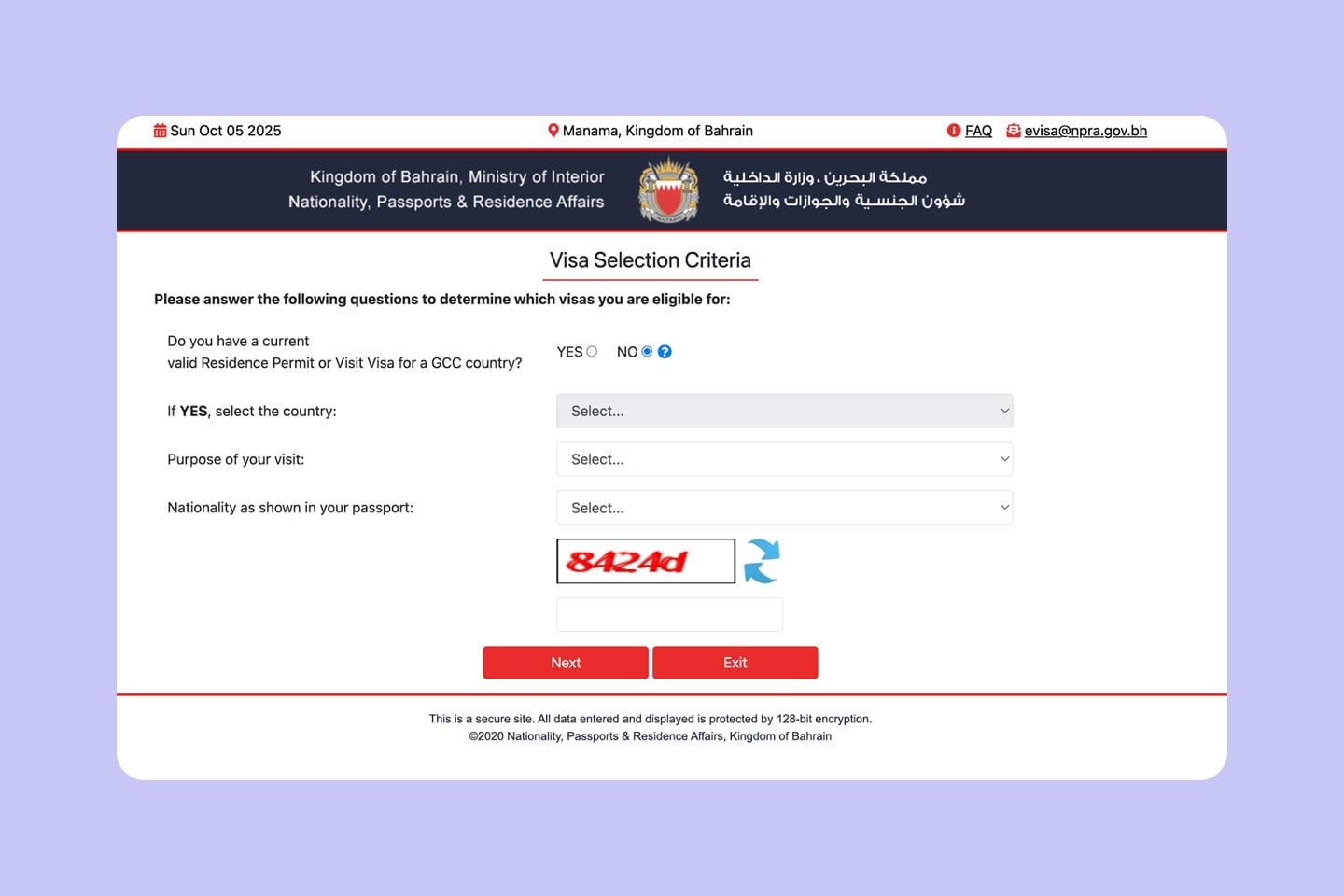
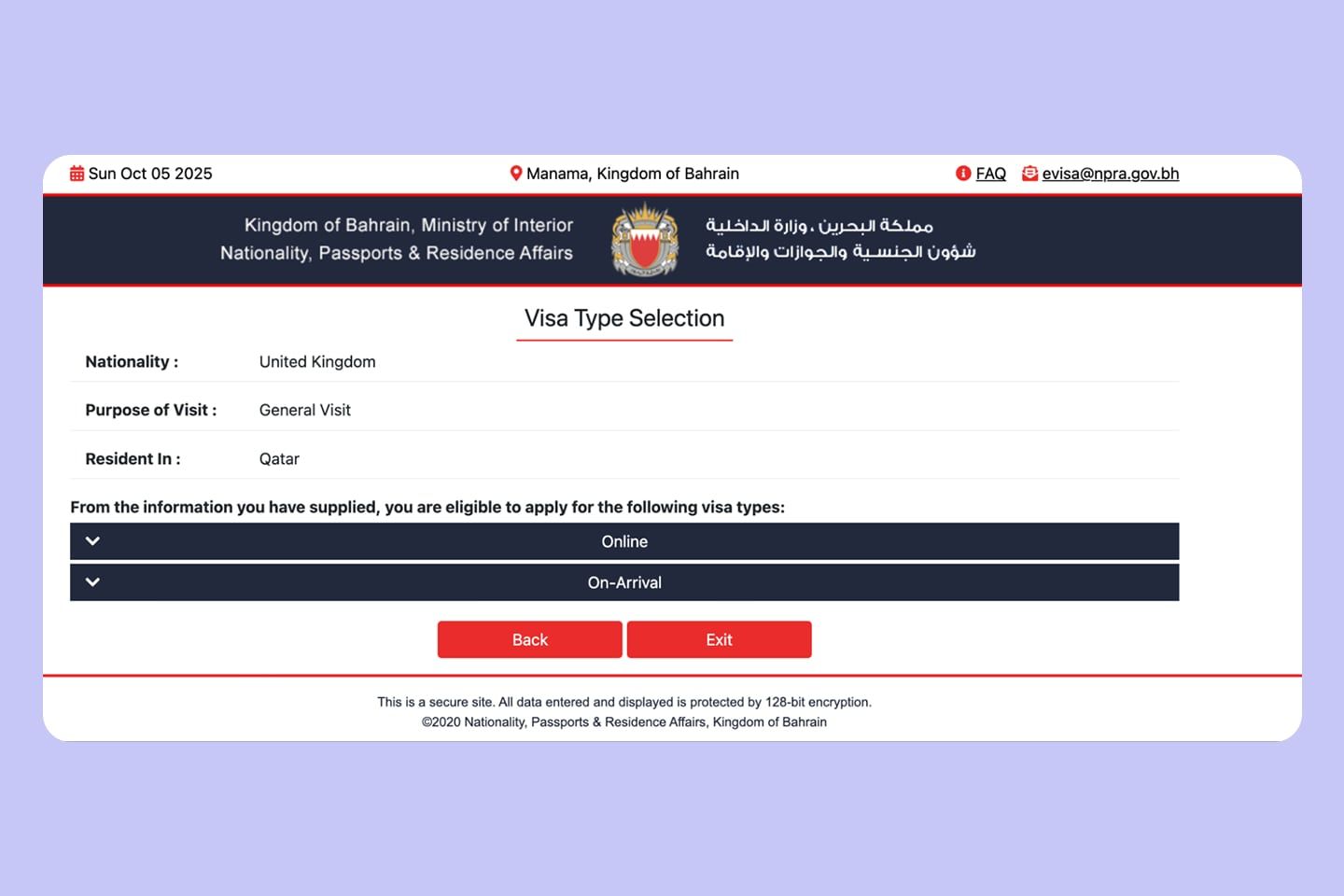
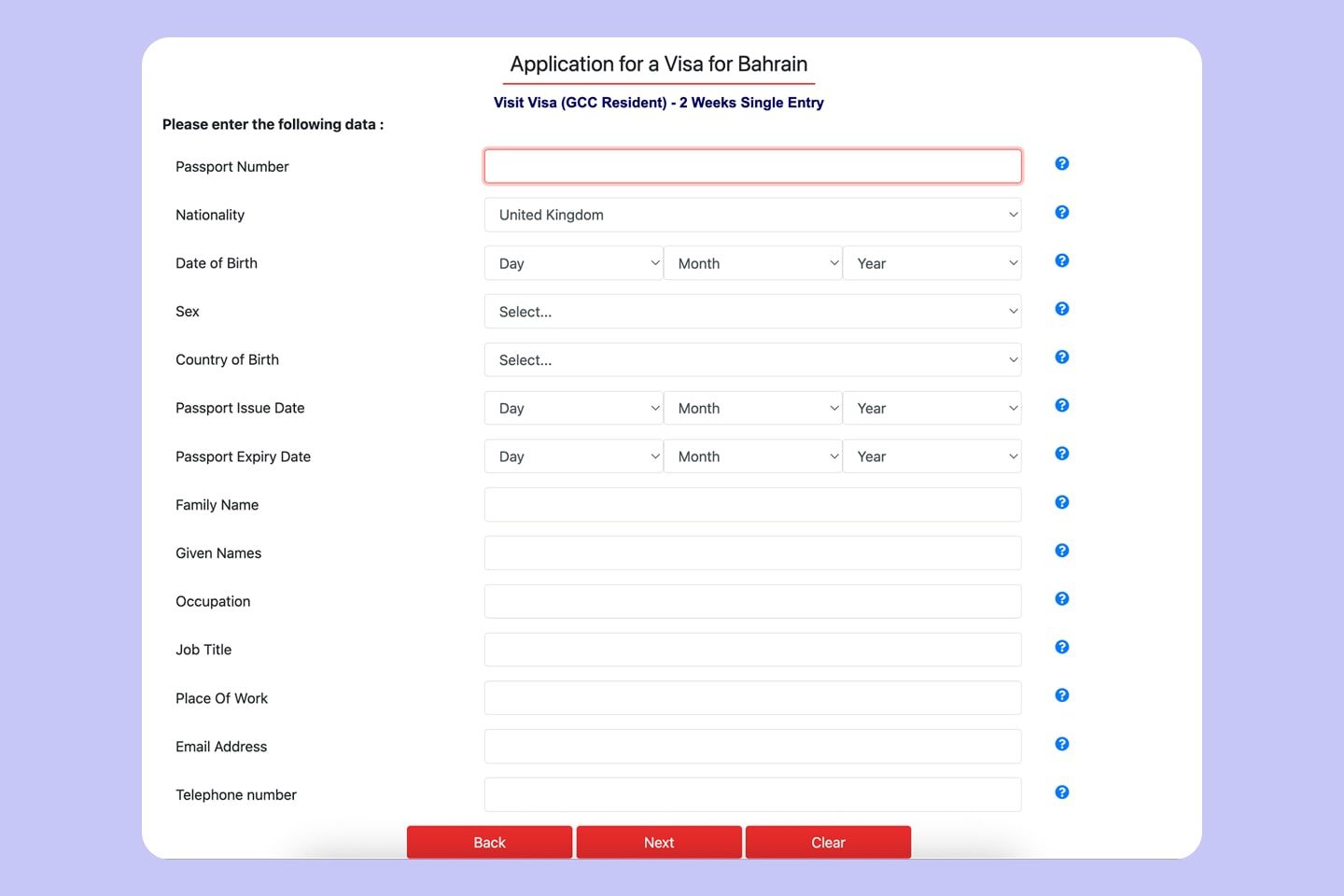

Visit the official Bahrain eVisa portal
Saudi Arabia visa requirements
Since there’s no direct land route between Qatar and Bahrain, every traveler must pass through Saudi Arabia. For GCC citizens, entry is visa-free.
For expatriate residents, a transit visa or tourist eVisa is required. Both can be obtained online through the Saudi eVisa platform. Prices for a short transit or stopover visa are typically around QAR 97 (SAR 100), but may vary depending on nationality.
To apply, you’ll need:
-
A passport valid for at least 6 months
-
Digital photo and travel details
-
For all nationalities, health insurance is automatically included in the visa fee
The Saudi visa process is quick — usually within 24 hours — and fully electronic. Once approved, the visa is linked to your passport for border entry.
💡 Standard car insurance from Qatar isn’t valid for driving across borders. However, if you have QIC full car insurance, you can add a GCC extension that covers own damage to your vehicle while driving in the UAE — keep in mind that this add-on doesn’t include third-party liability (TPL) — so you’ll still need to purchase TPL insurance for the UAE and Saudi Arabia.
How the border crossings work
The journey from Qatar to Bahrain involves two main border crossings — one at Abu Samra (the Qatar-Saudi border) and another at the King Fahd Causeway (the Saudi-Bahrain border).
Abu Samra border (Qatar → Saudi Arabia)
At the Abu Samra border crossing, you will need to present your passport, along with your Qatar ID, your vehicle's registration, and insurance documents. Saudi officials will review your visa and may conduct biometric screening, including fingerprint and photo verification, before stamping your entry. If your Qatari insurance does not cover driving in Saudi Arabia, you'll be directed to purchase temporary border insurance before you can proceed.
King Fahd Causeway (Saudi Arabia → Bahrain)
The final crossing takes place on the King Fahd Causeway — the bridge linking the two countries with immigration and customs on “Passport Island.” You’ll pay a toll of about QAR 24 (SAR 25) and pass through Saudi exit and Bahraini entry checkpoints.
At Bahraini immigration, present your passport, visa, and vehicle insurance. If you don't already have Bahraini coverage, short-term insurance can be purchased at the border or in advance through the Jesr app. Vehicles may be inspected to confirm registration details and the presence of basic safety equipment, such as a fire extinguisher, first-aid kit, and a reflective triangle.
Costs to expect on the road
Fuel is by far the most affordable part of your road trip expenses. An average family SUV, such as a Hyundai Tucson, consumes around 10–12 L/100 km. For a one-way distance of 450 km, this works out to 50–55 L of fuel.
At Qatar's current fuel price (≈ QAR 2/L) the round-trip fuel comes to around QAR 200–250. When you add tolls, border insurance, and visa fees, the total cost for a return journey is approximately QAR 400–600, depending on the vehicle and numbers of passengers.
Fuel is slightly cheaper in Saudi Arabia than in Qatar, and service stations are plentiful along all main highways. Petrol is more expensive in Bahrain, so most people fill up before crossing the Causeway.
Useful tips for smooth travel
-
Leave early in the morning to avoid crowds at borders and toll gates
-
Print hard copies of your insurance and registration — some checkpoints still insist on them
-
Check your driving licence validity or renew it in advance
-
Pre-trip vehicle inspection is a good idea: check tyre pressure, all fluids, condition of spare tyre, availability of fire extinguisher, first-aid kit — most checkpoints ask for these
-
Renting a car? Ensure the agency allows cross-border travel and request a “No Objection Certificate” for your rental car
-
Plan your stops — there are rest areas, mosques, and fuel stations across Saudi Arabia’s Eastern Province, but some stretches are long and remote
FAQ
Are pets allowed to enter Bahrain by car?
What currency and payment options are accepted at the King Fahd Causeway?
Can children travel by road from Qatar to Bahrain? Do they need any special documents?
Are there child seat or seatbelt rules in Saudi Arabia and Bahrain?