Contents
Qatar is a 100% urbanized, flat country, and ambient air temperatures can be extreme, reaching 45°C in the summer. These conditions often cause heat-related health issues such as dehydration and heat exhaustion. Thankfully, recognizing and preventing dehydration and heat exhaustion isn't difficult — here’s expert advice on how to spot the symptoms and what to do about them.
Dehydration: What it is and how to spot it
To put it simply, dehydration happens when your body loses more fluids than it takes in. Head of Clinical Operations at Medical Director Co, a platform connecting healthcare professionals opening a clinic to medical directors and collaborating physicians, Kiara DeWitt, explains how this creates problems with temperature regulation:
“Heat causes you to sweat. Sweat causes you to lose fluids. Lowered fluids make it more difficult for your body to cool.”
And, as the National Library of Medicine study notes, even 1% dehydration impairs our body’s ability to regulate its temperature.
Early signs can be subtle and hard to recognize, especially when you move from air-conditioned places to high temperatures or if you’re outside for longer. Dr. Roberto Valledor, a physician at a telehealth platform Mochi Health, came up with some symptoms to watch out for:
-
Excessive sweating
-
Muscle cramps
-
Weakness or fatigue
-
Lightheadedness and headaches
-
Dark yellowish or amber color of the urine
What many people don’t know is that thirst is actually a late sign of dehydration. When you feel parched, this means you’re already dehydrated.
As Dr. Valledor explains, when you feel like you need to drink water immediately, you’re already in mild dehydration. So, if you’re already outside and start feeling thirsty, you need to get water immediately and find a place to cool down.
How to recognize heat exhaustion
Heat exhaustion is a severe reaction to heat caused by extreme overheating. It usually comes with excessive sweating, dizziness, and nausea. Basically, your body will have trouble cooling itself, and your temperature will rise to 38°C and even 40°C.
“Symptoms of heat exhaustion can start as profuse sweating, cool skin that is clammy to the touch, weak and rapid pulse, nausea…”, DeWitt notes.
But the biggest red flag, according to Dr. Vallendor, is a change in your mental state. Any confusion, slurred speech, agitation, or weird behavior combined with fever is a sign of an emergency. So, call an ambulance immediately and find a place to cool down while you wait.
What are the most efficient recovery steps?
The good news is that recovery from mild to moderate dehydration and heat exhaustion can take no more than a few hours. As Dr. Valledor explains, the most important thing is to rest, cool off, and rehydrate with water and electrolyte-rich drinks, as they are lost through excessive sweating:
“Try to rehydrate slowly; it can be uncomfortable if you drink too much water too fast and you start to feel nauseous. Most patients begin to feel better after 24 to 48 hours. Fatigue could last up to two more days.”
On the other hand, recovery from excessive exhaustion and heat stroke requires more time and medical attention since it involves your brain and other organs. Most commonly, it would take between a couple of days and a few weeks. Elderly patients, as well as those who didn’t seek help in time, could have long-term health problems.
Moreover, you’ll likely be more heat-sensitive over the next week or so, so DeWitt advises taking it easy, as you’re at risk of developing the condition again.
How to prevent heat exhaustion and dehydration in Qatar’s climate
The Qatari climate has both high temperatures and high humidity. Heat makes our bodies sweat to cool down, but humidity hinders sweat evaporation, increasing the risk of heat-related conditions. Here are some of the ways to prevent this.
Stay hydrated even when you’re not thirsty
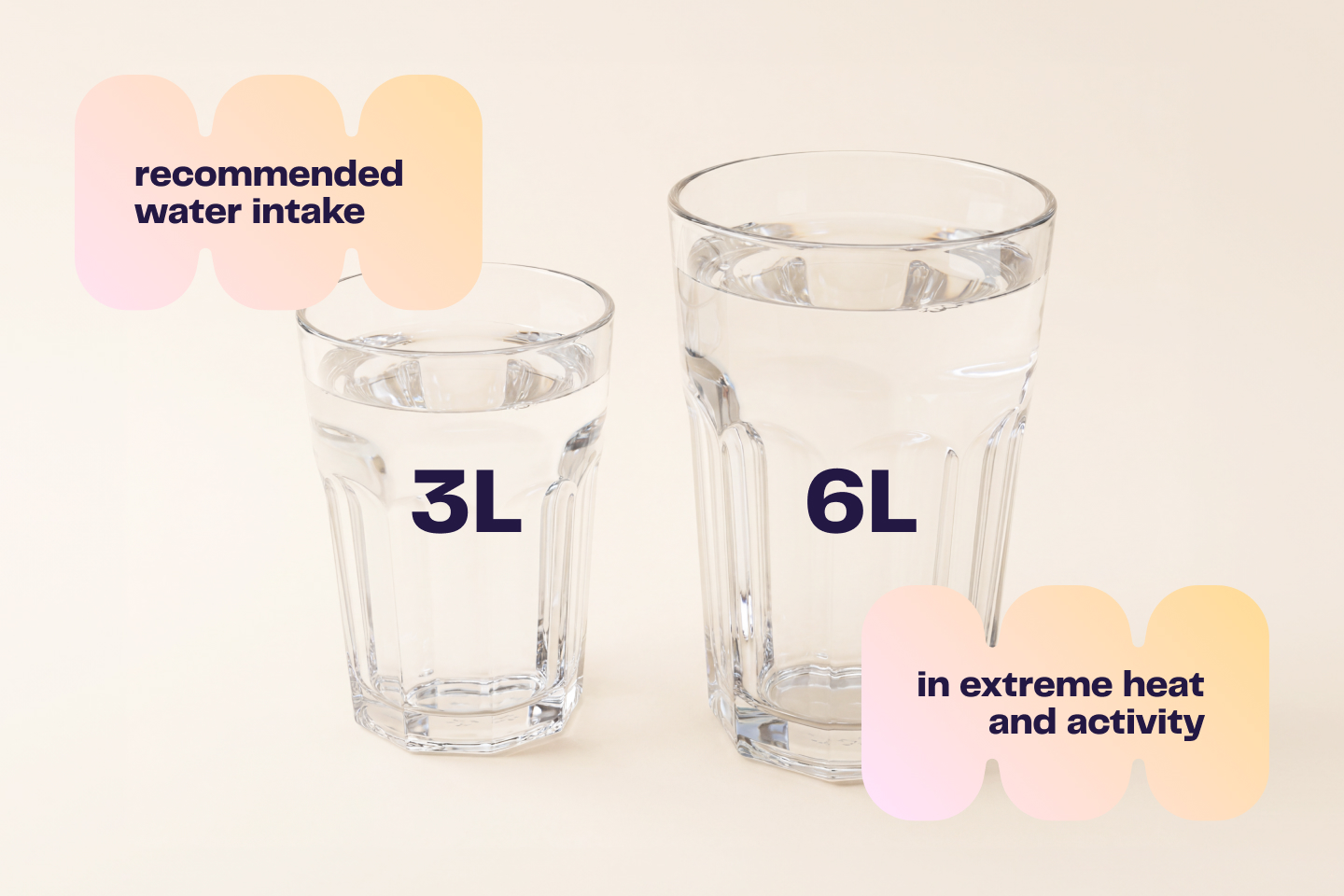
According to research published by the National Library of Medicine, people can lose up to 2 liters of liquid per hour during high activity in the heat through perspiration and sweating. Therefore, as indicated in the study, adults should drink between 2.5 and 3 liters of water per day. And, in extreme heat and activity, as much as 6 liters of water a day is recommended.
Co-Founder & Chief Medical Officer at VedaNu Wellness, Dr. James J. Chao advises hydrating before going outside. Drink plenty of water half an hour before you head outdoors and continue to hydrate even when you don’t feel thirsty, especially if it’s too hot outside.
Stock up on electrolytes
“If you’re going to be outdoors for an extended period of time and in temps above 32 degrees, make sure you’re getting electrolytes, too. Sodium is lost in your sweat, and you can lose anywhere from approximately 460 milligrams to over 2,600 milligrams per hour,” Dr. Chao notes.
The intake of electrolytes such as sodium, magnesium, calcium, and potassium can be increased with supplementation. But the best way to obtain them is to incorporate dairy, bananas, leafy greens, and nuts into your diet. Coconut water and pickles are also a great source of electrolytes.
Wear lightweight clothing
Dr. Chao recommends wearing light-colored, lightweight, loose-fitting clothing with breathable fibers like linen or cotton to allow airflow and sweat evaporation.
You should also try scheduling any outdoor activities in the early morning or evening when temperatures are lower.
Take precautions indoors as well
DeWitt explains that “poorly ventilated rooms can actually cause heat exhaustion as well. So even if you’re inside, take extra precautions.”
Therefore, hydration, stocking up on electrolytes, and lightweight clothing aren’t just measures you should take when going outside. You should be mindful of dehydration symptoms when you’re indoors as well, especially when you can’t properly ventilate the area.